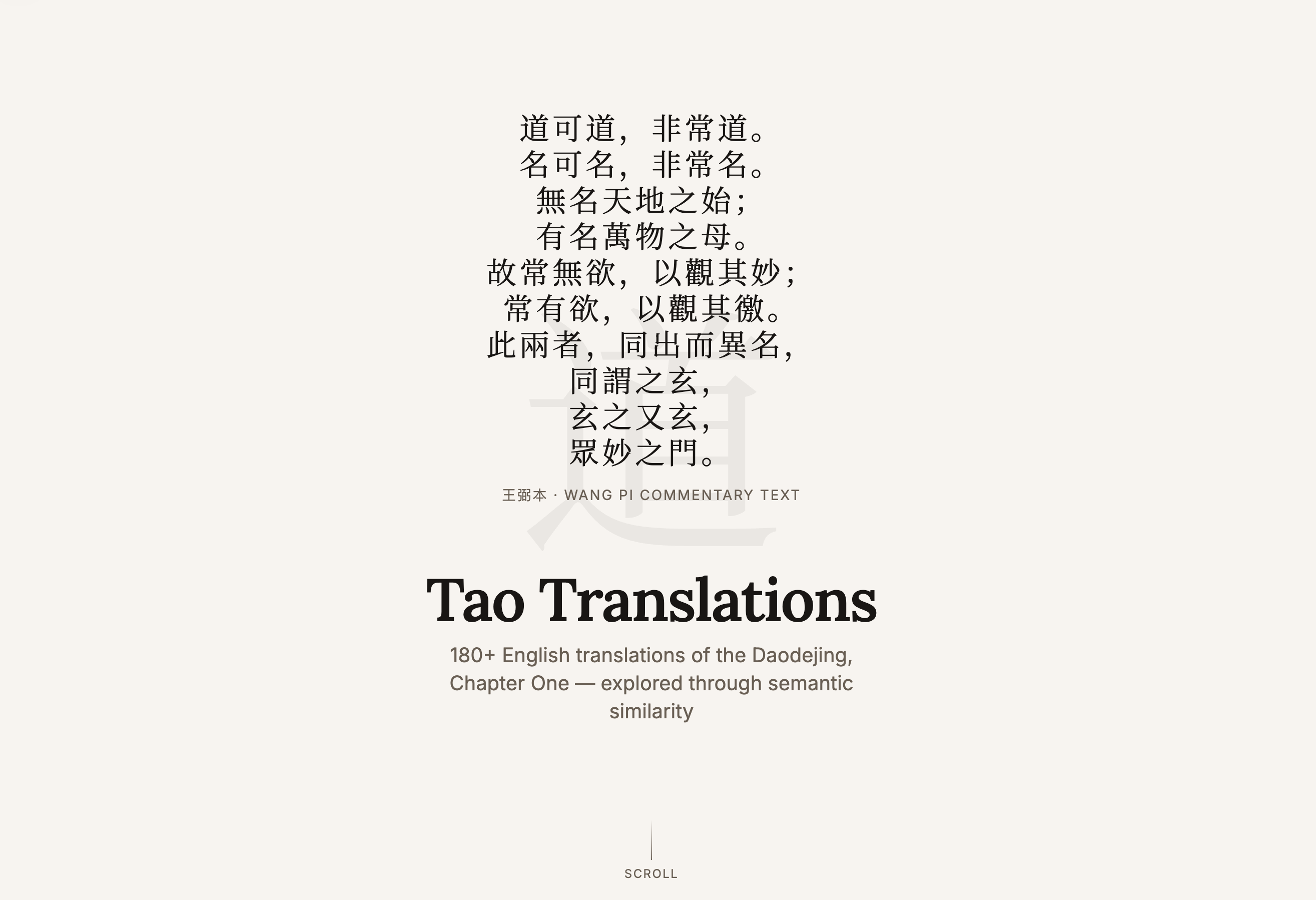
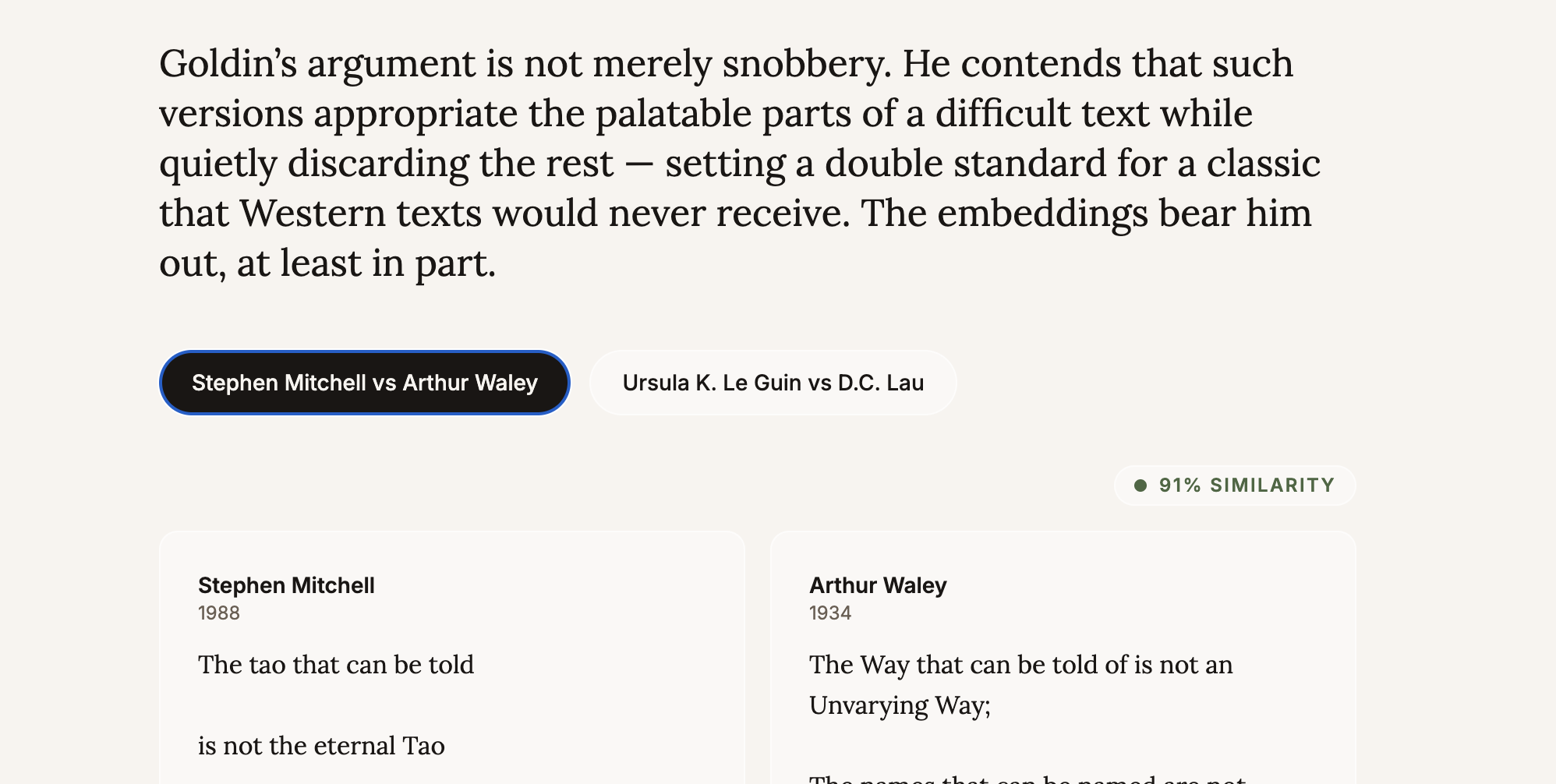
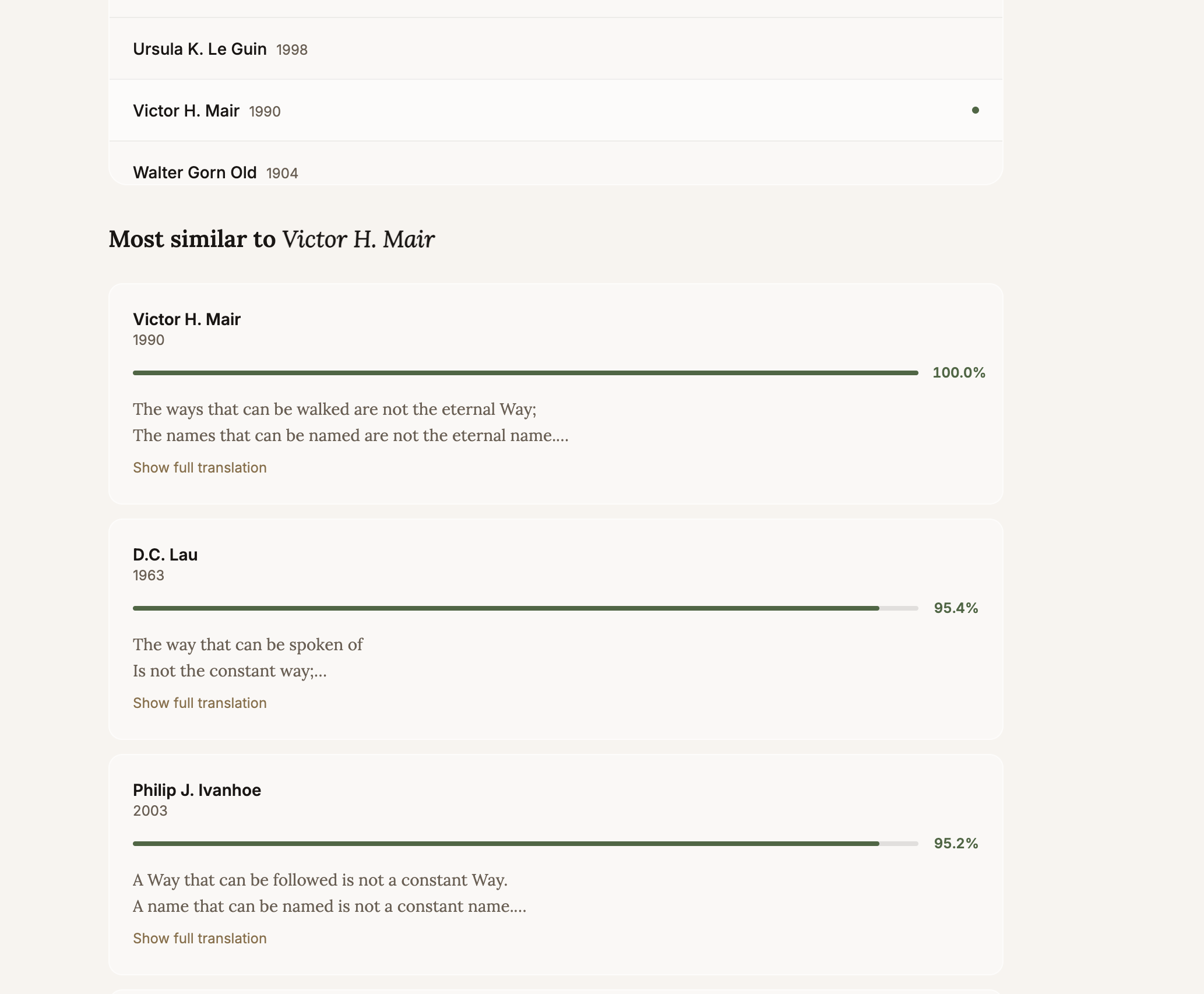
Tao Translations (visual essay) (opens in a new tab) was inspired by my time studying with the sinologist Victor Mair, professor of Chinese language and literature at the University of Pennsylvania.
Background
The Daodejing has been called the most translated text besides the Bible, and currently has over 250 translations in Western languages. Its text is an "anthology of earlier sayings and teachings", from the oral tradition of “Laoist” schools around 300 B.C., as well as additions made by teachers who “composed” and arranged the sayings into chapters. The standard traditional Chinese text of the Daodejing is translated from the Wang Pi commentary, although some more recent translations are based on the Ma-wang-tui manuscripts.
The proliferation of the Daodejing has had profound influences in both the east and west. In ancient China, it represented an opposition to the presiding Confucian cultural system. Over the centuries, Daoist commentaries and cults emerged with roots tracing back to the original text. In the West, the Daodejing is popular both among academics as a rich historical document and to the layperson for its lessons. For our purposes, we consider the Daodejing because of the multitude of unique translations into English.
It's built on next.js, using vercel, pgvector.
View it here -> Tao Translations (opens in a new tab)